
Hazard Analysis and Risk Assessment (HARA)
A rigorous, plant-wide identification and qualitative/semi-quantitative assessment of workplace hazards, operational risks, and control effectiveness across operational tasks and equipment.
Purpose of the assessment or study
To establish a comprehensive baseline hazard profile of operations, rank risks by potential severity and likelihood, and formulate practical risk reduction measures following the hierarchy of controls.
Applicable facility types
Engineering workshops, manufacturing plants, automotive assembly units, foundries, packaging facilities, and industrial utilities across Tamil Nadu and broader industrial hubs.
Proposed study scope
Evaluation of routine and non-routine operational activities, machinery interfaces, chemical handling, material movements, electrical installations, and environmental physical agents within defined plant zones.
Scope is structured as a technical proposal framework for client review and adjusted to your facility layout.
Methodology overview
Task and area breakdown, hazard identification (mechanical, physical, chemical, ergonomic), assessment of existing control barriers, risk ranking using standard risk matrices (severity x likelihood), and formulation of actionable risk reduction proposals.
Client inputs and site visit arrangements
Information required from client
Plant layout drawings, operational process flowcharts, equipment inventory, standard operating procedures (SOPs), maintenance logs, and historical incident records.
Site visit arrangements
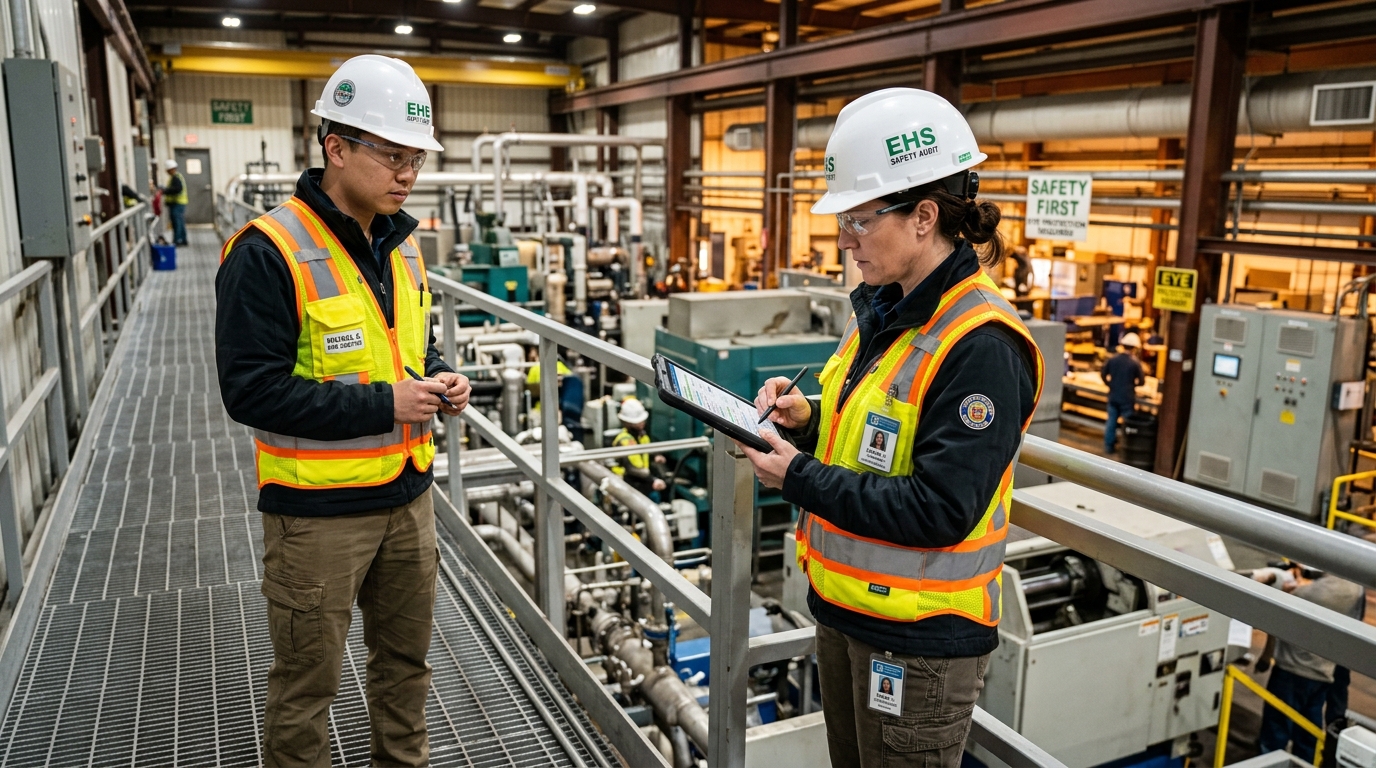
Detailed plant walkthrough across operational shifts, observation of worker tasks, inspection of machinery safeguards, and interviews with frontline operators and supervisors.
Indicative deliverables
Comprehensive HARA risk register, prioritized hazard matrix, gap analysis of existing controls, and corrective action recommendations roadmap, subject to agreed scope.
Frequently asked questions
What is the distinction between HARA and HIRA?
Related assessment services
Electrical Risk Assessment
A thorough technical evaluation of electrical infrastructure, distribution networks, switchboards, earthing systems, and operational practices to identify shock, fire, and flashover hazards.
Fire Risk Assessment
A comprehensive assessment of facility fire ignition sources, fuel loads, means of escape, compartmentation, detection systems, and emergency fire-fighting arrangements.
Fire Load Calculation
Engineering assessment and quantitative calculation of the total heat energy that would be released by combustible materials in a defined building space or industrial compartment.