
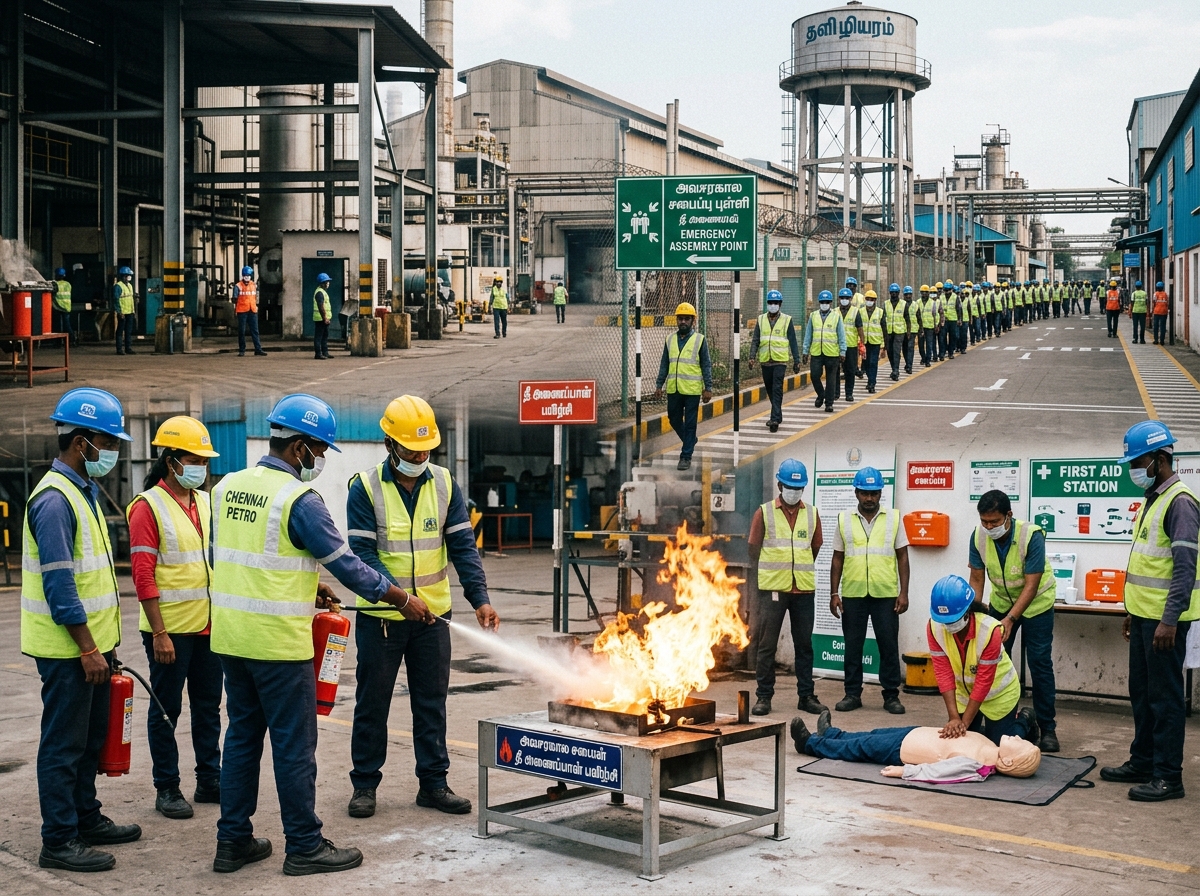
Onsite Emergency Preparedness & Emergency Response Team (ERT) Training
Intensive preparedness training for designated workplace emergency response teams responsible for leading initial response and incident containment.
Who it is for
Appointed ERT members, facility engineers, security supervisors, and safety committee members.
What you will learn
- Define specific roles, command structures, and communication chains within an on-site ERT
- Conduct rapid situational assessment during initial minutes of an emergency
- Coordinate initial containment measures while ensuring responder safety
- Liaise effectively with municipal emergency services upon their arrival
Objectives are proposed syllabus content, shared for your review and adjusted to your facility.
Topics covered
- 1Incident command system fundamentals for industrial and commercial facilities
- 2Emergency communications protocols and staging area operations
- 3Hazard containment and utility isolation procedures
- 4Personnel headcounts and search verification coordination
- 5Handover briefing protocols for public fire and rescue authorities
Practical activities
- Tabletop emergency scenario simulation exercising command hierarchy
- Walkthrough of facility emergency control points and utility shutoffs
- ERT radio communications and briefing drill
Delivery and site needs
Delivery arrangements
Venue and delivery arrangements are confirmed during enquiry.
Site space and clearance
Access to facility layout drawings, emergency assembly areas, and designated incident control stations.
Frequently asked questions
How does ERT training differ from general employee fire training?
Related programmes
Basic Fire Safety Training
Foundational fire awareness covering the chemistry of fire, workplace hazard recognition, emergency alerting, and practical portable extinguisher operation.
Evacuation Mock Drill
Structured planning, execution, timing, and comprehensive post-drill evaluation of a full or partial facility emergency evacuation exercise.
SCBA Training
Comprehensive training on the pre-use inspection, donning, cylinder pressure monitoring, and operational safety of Self-Contained Breathing Apparatus.