
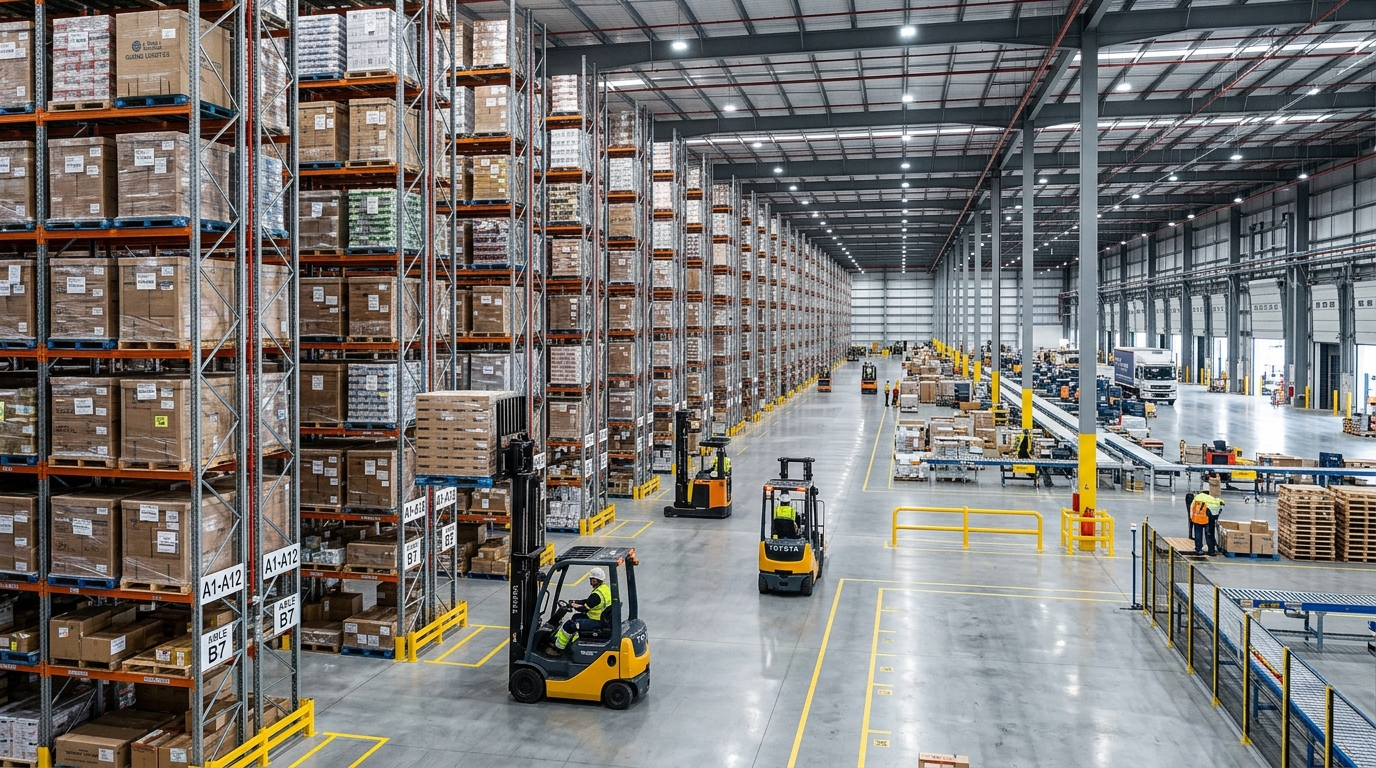
Material Handling Safety
Safe rigging, stacking, palletising, and slinging practices for moving raw materials, components, and heavy finished goods across production facilities.
Who it is for
Warehouse personnel, riggers, storekeepers, logistics supervisors, and dispatch teams.
What you will learn
- Inspect synthetic webbing slings, wire ropes, and shackles prior to any lift
- Understand Safe Working Load (SWL) and Working Load Limit (WLL) derating factors
- Apply correct sling hitch configurations: straight, choker, and basket hitches
- Implement safe warehouse stacking, racking load distribution, and pedestrian aisle separation
Objectives are proposed syllabus content, shared for your review and adjusted to your facility.
Topics covered
- 1Rigging hardware: shackles, eye bolts, lifting beams, and web slings
- 2Impact of sling angles on tension: why angles below 45 degrees multiply sling stress
- 3Centre of gravity determination for irregular and unbalanced loads
- 4Standard hand signals for communication between riggers and equipment operators
Practical activities
- Inspection of damaged web slings (cuts, acid burn, UV degradation, broken stitching)
- Demonstration of sling hitch configurations on a test load
Delivery and site needs
Delivery arrangements
Venue and delivery arrangements are confirmed during enquiry.
Site space and clearance
Warehouse or yard with access to rigging hardware and sample loads.
Frequently asked questions
When must a synthetic lifting sling be condemned and removed from service?
Related programmes
Height Safety
Comprehensive fall prevention training covering full-body harnesses, lanyard anchorage, scaffolding inspection, and ladder safety standards.
Forklift Safety
Operational safety training for counterbalanced forklift drivers covering pre-shift checks, stability triangle physics, load handling, and pedestrian protection.
EOT Crane Operator Training
Operational safety, daily limit switch testing, sling attachment, and pendulum swing control for Electric Overhead Travelling (EOT) crane handlers.